Post-Mortem
Cinq Supplices
Book 2
ludique · Post-Mortem · mardi, 17 juillet 2018 à 12:42:03 · 8 min
The previous article offered some thoughts on the Cinq Supplices campaign from a statistical angle, now that our adventure has ended. Time to move on to the book-by-book summaries of the PCs' exploits.
If you stumbled upon this article by chance and plan to one day play the campaign from the PCs' side, I invite you to read no further.
Preamble
Among the many reviews of Cinq Supplices - positive or negative - the one from the blog "Welcome to Nebalia" stands out through its detailed treatment of every passage of the campaign, as much as through its pleasant incisive tone, which however sometimes verges on cruelty (cf. the conclusion of their text). It also seems to crystallize a good number of reproaches voiced by the community about the book from éditions Sans-Détour. I therefore invite you to read it, and I will rely on their opinion to support my point, sometimes in agreement, sometimes in opposition.
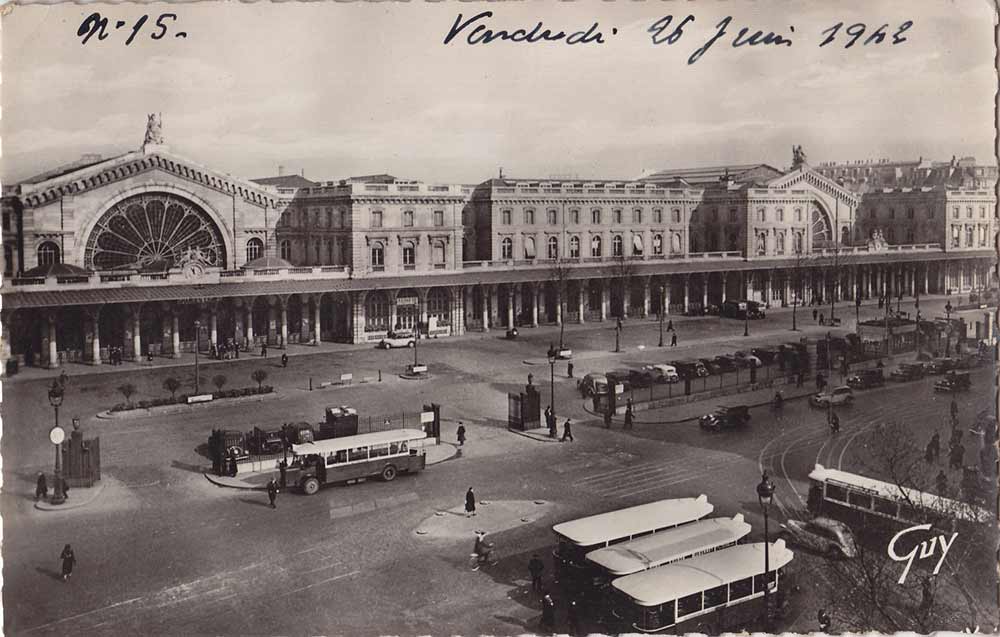
The Paris book contains three scenarios, dispatched within our group in three sessions. It consists of a short half-session introduction ("Arcanum of the Supplicated"), a discovery of the Gare de l'Est and the intrigues brewing there ("China at the Gare de l'Est"), then a full-fledged investigation around said intrigues ("Secrets of Asia in the Heart of Paris").
Forum summaries:
- Arcanum of the Supplicated + China at the Gare de l'Est
- Unfortunately, the second session was not written up
- China at the Gare de l'Est + Secrets of Asia in the Heart of Paris
In short
Wordle of session 1, "Arcanum of the Supplicated"
Wordle of session 1, "China at the Gare de l'Est"
Wordle of session 3, "Secrets of Asia in the Heart of Paris"
During these scenarios, the initial group comes together as planned during the tumultuous evacuation of the Chinese shadow theater. Four characters start the campaign: Jacques d'Oye, a psychologist who plied his trade in China, Ki Qua, a vagabond friend of Li Ru, Fernand Legoffe, a Breton farmer present as the result of a mix-up, and Jeanne Lefebvre, daughter of a late archaeologist friend of Louis Lonsdale. This short encounter already makes it possible to identify two "wings" within the group: the daredevils who do not hesitate to rescue Liu Chen of the Arcanum of the Five Torments (Qua and Jacques), and the cautious ones who prefer to hold back to spare their sanity (Jeanne and Fernand). They are eventually joined by Marie-Joséphine Pompidou, an old bigoted nun with a surprising penchant for violence, whose attitude halfway between the two wings will make it possible to build a few bridges.
While Qua and Jacques try to convince the rescue services to let them question Liu Chen by improvising a few lies sanctioned by catastrophic die rolls, Fernand and Jeanne wisely wait for the visit of the Gare de l'Est the next day. On location, Fernand bonds with the Parisian upper crust when Guédon pounces on him because of his fake identity. He is forced to "help" him in his intelligence work on Sayk Fong Lee and even obtains a short face-to-face with the Manchu on his train. The others meet Mei Fang and befriend her, then discover the theft of the antiquities, the links between the Manchus and Louis Lonsdale, as well as the existence of the Keepers. Only two characters get tattooed: Marie-Joséphine and Jacques are caught on Sayk Fong Lee's train as he is about to leave France. The finale of this book sees the sorcerer take off towards his native land while the last Parisian Keepers and the co-opted Guédon more or less willingly enlist the PCs in their politico-mystic quest.
Commentary
The scenario unfolds more or less as planned. This first part of the campaign is the opportunity to cement a group with heterogeneous RPG practices, but also to set up the characters' motivations for the rest of the campaign. And there, I side with Nebal: let us admit that leaving Paris is no small matter, even practically against nature for most PCs. Unless they have some interest in Manchuria or are very superstitious, the characters have practically no reason to chase a prominent Chinese figure across the world. Liu Chen is not a plausible reason to embark on the adventure, unless you have a group of particularly "pulp" characters wearing their heart on their sleeve. You have three assets to push your group towards departure in a credible manner: (1) the preliminary adventures, (2) the dragon seal and (3) that good Guédon.
- I plead guilty to having neglected the preliminary adventures. Pressed for time and thinking I should spare the novice players by avoiding special sessions, I made a grave mistake whose repercussions carried through to the end of the adventure. Carve these words in stone: if you embark on this campaign, play the preliminary adventures one way or another. The essential thing is to give the investigators a reason to start their crusade.
- The dragon seal tattoo is the key. Admittedly, a character skeptical of the supernatural could well be indifferent to it, but after seeing shadows murder the living, then escape through an old man's pectoral tattoo, one can plausibly expect your players to consider their characters shaken in their convictions. It is the main reason that can push a character to chase the old Manchu, so do not hesitate to use it if you fear your group feels too strong a willing suspension of disbelief for following your campaign. Ironically, in our group, one of the two tattooed characters promptly left the ship, leaving a single character grappling with this affliction: caramba, failed again!
- The ultimate device, however cheap, is embodied in George Guédon, future strongman of France in Manchuria. With his Parisian gentleman's panache and his veiled threats, he will easily lead the group wherever he desires, and even grant it a cohesion absent at the start of the adventure. It is therefore to this fine NPC that we owe the story's relative credibility. Problem: why would Guédon, an agent of the French government, take an interest in the PCs rather than use his subordinates? Apart from the PCs' presence at the key moments of the Paris events (enough to motivate Guédon to take them along, willingly or not), it seems hardly plausible that he would stoop to such a lack of professionalism.
Still on the critical front, Guang Ying is a prickly character to portray. The cliché of the "old sage who KNOWS" is already enough to make one wince - this device is used by far too many Call of Cthulhu campaigns - but his death becomes downright embarrassing. Kicking the bucket in the middle of a cryptic sentence warning the protagonists - I never thought I would have to play such a scene in a serious scenario. Admittedly, this whole image of a wise old man is meant to shatter when the group discovers his pathological propensity to lie to achieve his ends, but you will have to wait a good fifteen sessions before the cat is let out of the bag. In the meantime, he will remain an old-man-who-knows in your players' eyes. Irritating! So think about reworking the old man's last moments: the ideal is for him to die on the spot, at the Gare de l'Est, and for his disciples to bring back his remains and provide the PCs with the information he was supposed to pass on to them. Why not use Li Ru? The story barely mentions him again from the end of the chapter onward, so you might as well keep him around after playing a more important role for the group.
Fortunately, this first book of adventures still fulfills its contract well. Its relatively "free" construction - the exposition on one side, the schedule of the important NPCs on the other, and the characters' possibilities for action in between - allowed the players to explore their leads without apparent frustration. The secondary stakes can slip through the players' fingers: mine completely missed the world's fair, without it affecting the rest of the adventure.
Some "cinematic" sequences - Liu Chen pronouncing his name, the tale of the Ransomers of Divine Right, Sayk Fong Lee's departure - particularly hold up the whole campaign. The feeling of dealing with a story "thought through" from the start is thereby reinforced. Similarly, the appearance of the unsettling Wandering Peddler is the first iteration of a game ritual as much appreciated as feared by our team. These successful narrative devices do not build the plot per se, but give it pace and personality: let us wager that this is what will remain of the campaign in a few years.
An opinion to share about this article? You can leave it on the dedicated topic of the Organisation Très Secrète forum.